Septic Tank Pumping in Dayton, TX
Quality, routine septic tank pumping to ensure your system runs properly. We pump tanks for homes around Dayton, Liberty, Crosby and Baytown, aerobic systems included.
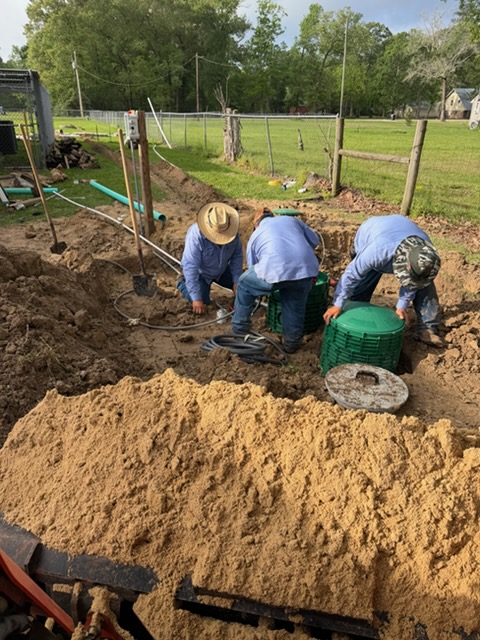
What pumping actually does
Everything that goes down your drains ends up in the tank. Bacteria break a lot of it down, but not all of it. What’s left settles into a layer of sludge on the bottom, with a layer of scum floating on top. Those solids don’t go away on their own, and pumping is the only way to get them out for good.
On an aerobic system, solids build up in the trash (pretreatment) tank, the clarifier and the pump tank. Left too long, they move downstream into the pump and the spray lines, which is where small bills become big ones.
Why pump on schedule
- Prevents blockages and backups
- Protects pumps, floats and lines
- Keeps the system treating water the way it should
- Helps the whole system last longer
How often?
There’s no single number that fits every home. It depends on the size of your tank, how many people live in the house, how much water you use, and how your system was designed.
On an aerobic system, regular inspections show when solids are building up, and that’s when it’s time to pump. For a closer look, read How Often Should an Aerobic Septic System Be Pumped?
Signs your tank is due
Slow drains
Sinks, tubs and toilets all draining slowly, not just one.
Gurgling pipes
Bubbling or gurgling sounds when water goes down.
Odors
A sewage smell inside the house or out in the yard.
Alarms
A high-water alert or alarm on an aerobic system.
Wet spots
Soggy ground or standing water near the tanks.
Solids at inspection
Your technician sees solids building up in the tanks.
What an aerobic pump-out looks like
We clean the whole system, not just the first tank. You’re welcome to watch the whole way through; we encourage it.
-
1
Find and open every tank
We locate all three tanks and open them up, digging out the lids if they’re buried.
-
2
Pull the pump
The pump comes out of the pump tank first, so it isn’t damaged and we can look it over.
-
3
Pump the trash tank
We pump the trash tank all the way down to the concrete bottom.
-
4
Refill the aerobic chamber halfway
After cleaning, we put water back in the aerobic chamber, about halfway, so the tank doesn’t “float” out of the ground.
-
5
Clean the pump tank
We clean out the pump tank and put the pump back in.
-
6
You take a look
Before the lids go back and get covered, you can see the clean tanks for yourself.
“They did a great job servicing my aerobic septic system. I hadn’t done a pumpout for quite a few years, so tanks were full of sludge, but they took care of it. Nice that their truck has a 2500 gallon capacity, because they needed 2000 gallons to accommodate all the extra cleaning water in addition to the normal contents.”
Questions homeowners ask
How often should my tank be pumped?
It depends on your tank size, your household and your water use. On an aerobic system, inspections show when solids are building up. Tell us when it was last pumped, and we’ll tell you honestly whether it’s due.
Do I need to be home?
We encourage it. You’re welcome to watch, ask questions as we go, and look at the clean tanks before the lids go back on.
How do I get ready for a pump-out?
- If you know where your lids are, tell us when you call.
- Unlock gates and keep dogs inside; our technicians need safe, easy access to your system.
- Clear anything sitting over the tanks.
My alarm is going off. Do I need pumping or a repair?
It can be either. A high-water alarm can come from a full tank, but also from a failed pump, a stuck float or a lot of rain. We find out which before we do anything. See Servicing & Repairs.
Can I park or build over my septic system?
No. Keep vehicles and structures off every part of it: the tanks, the lines and the spray or drip area.
Tank due for a pump-out?
Call and tell us when it was last pumped. We’ll get you on the schedule and walk you through what we find.